
 2 months ago
28
2 months ago
28
- XRP is down around 50%+ from its peak, pushing price back into major historical zones
- The $1.50–$1.30 region is the first accumulation area, with $0.90–$0.70 as the next zone
- Resistance sits in the low-$2s and mid-$3s, while long-term bulls still target $10
XRP has been taking a pretty rough hit lately after its last strong run higher. What looked like a clean breakout earlier in the cycle has cooled off quickly, and now the XRP price is down more than 50% from its recent peak. That kind of drawdown isn’t unusual in crypto, but it always changes the mood. Fast.
The drop has also pushed XRP back into trading zones that have mattered in past cycles, which is why traders are suddenly watching every candle again. The main question now is simple, but painful: can XRP settle and build support here, or is the market still setting up one more dip before it finally stabilizes?
After a 58% drop, XRP enters its first accumulation zone
Crypto analyst Crypto Patel shared a new XRP chart following the sharp move lower. According to his two-week XRP/USDT view, XRP has fallen around 58% from its peak and is now sitting in the mid-$1.50 range. In his view, this is the part of the cycle where opportunities start showing up again, but only for traders who can stay patient and not panic buy the first green candle.
The key zone he’s focused on is the first accumulation band between $1.50 and $1.30. Patel notes that XRP has now entered this region, and he sees it as an area where buying slowly makes more sense than rushing in. This zone also lines up with older support that previously acted like a floor before XRP pushed higher, so the market reaction here could matter more than people think.
If price holds, sentiment may stabilize. If it fails, things can get ugly, quickly.
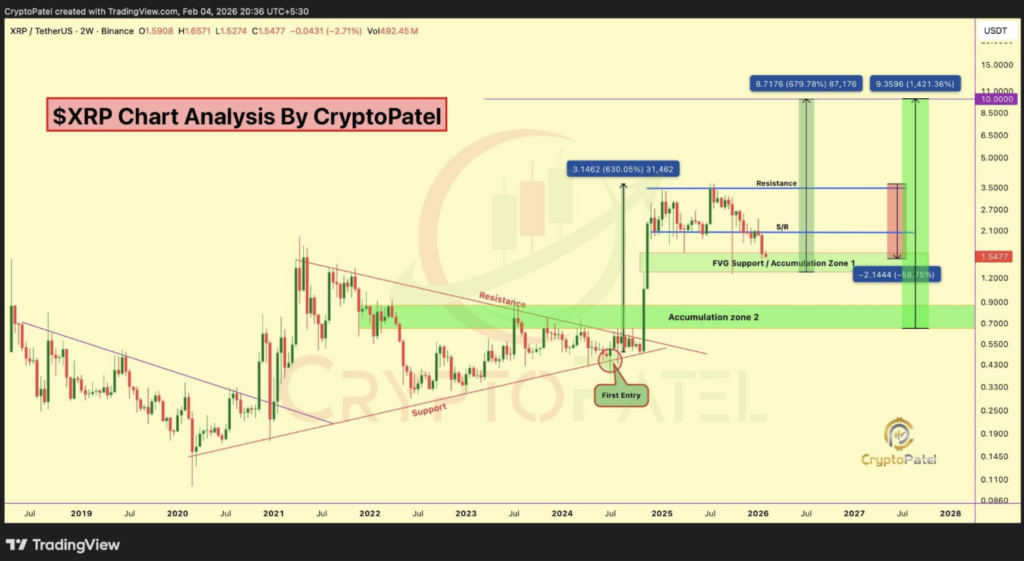
If $1.30 breaks, the next level sits much lower
Patel also laid out the downside scenario without sugarcoating it. If XRP slips below $1.30, he expects the next major area of interest to be far lower, with bids planned between $0.90 and $0.70. That second accumulation zone is not random either, it’s a major historical base where XRP traded for a long time before the last breakout.
If price revisits that region, Patel views it as the kind of dip that could offer the strongest entries for the next cycle. It’s basically the “if we get lucky, but it’ll feel horrible” level. And yeah, those are usually the ones that end up being the best, ironically.
Still, none of this is guaranteed. A market can hover in the middle for weeks and punish everyone equally, bulls and bears, before it finally decides what it wants.
Resistance overhead and why the long-term target matters
On the upside, Patel’s chart shows resistance in the low-$2 range, with a much stronger ceiling closer to the mid-$3s. These are levels where XRP struggled before rolling over into the current decline. If XRP wants to shift the structure bullish again, it would need to reclaim those zones with real momentum, not just a quick spike.
Patel continues to hold a long-term target of $10, and his logic is pretty straightforward. If you believe XRP can eventually reach that kind of level, buying after a deep pullback makes far more sense than chasing at $2 or $3. It’s not a complicated idea, it’s just hard to execute when price is falling and the timeline feels uncertain.
The market now waits for the real answer
Patel also reminded traders of his previous bear market call near $0.50, a level that later preceded XRP’s rally to $3.66, delivering more than 600% gains. Now, he’s watching to see whether the $1.50 to $1.30 zone can hold as a new base, or whether the market offers a deeper entry closer to $0.90.
For now, XRP is sitting in a key area where both outcomes are still on the table. If buyers defend it, this could become a slow accumulation phase. If they don’t, the next major zone below could arrive sooner than most people want to admit.
Disclaimer: BlockNews provides independent reporting on crypto, blockchain, and digital finance. All content is for informational purposes only and does not constitute financial advice. Readers should do their own research before making investment decisions. Some articles may use AI tools to assist in drafting, but every piece is reviewed and edited by our editorial team of experienced crypto writers and analysts before publication.









 English (US) ·