BTC $81,597
  ETH $2,399
  USDT $0.9990
  BNB $745.82
  XRP $1.32
  USDC $0.9996
  SOL $104.43
  TRX $0.3300
  FIGR_HELOC $1.03 Last updated 23 Oct 2026, 11:06 UTC
 ZEC $1,229
 Crypto may be better off without CLARITY Act, Bitwise CIO says
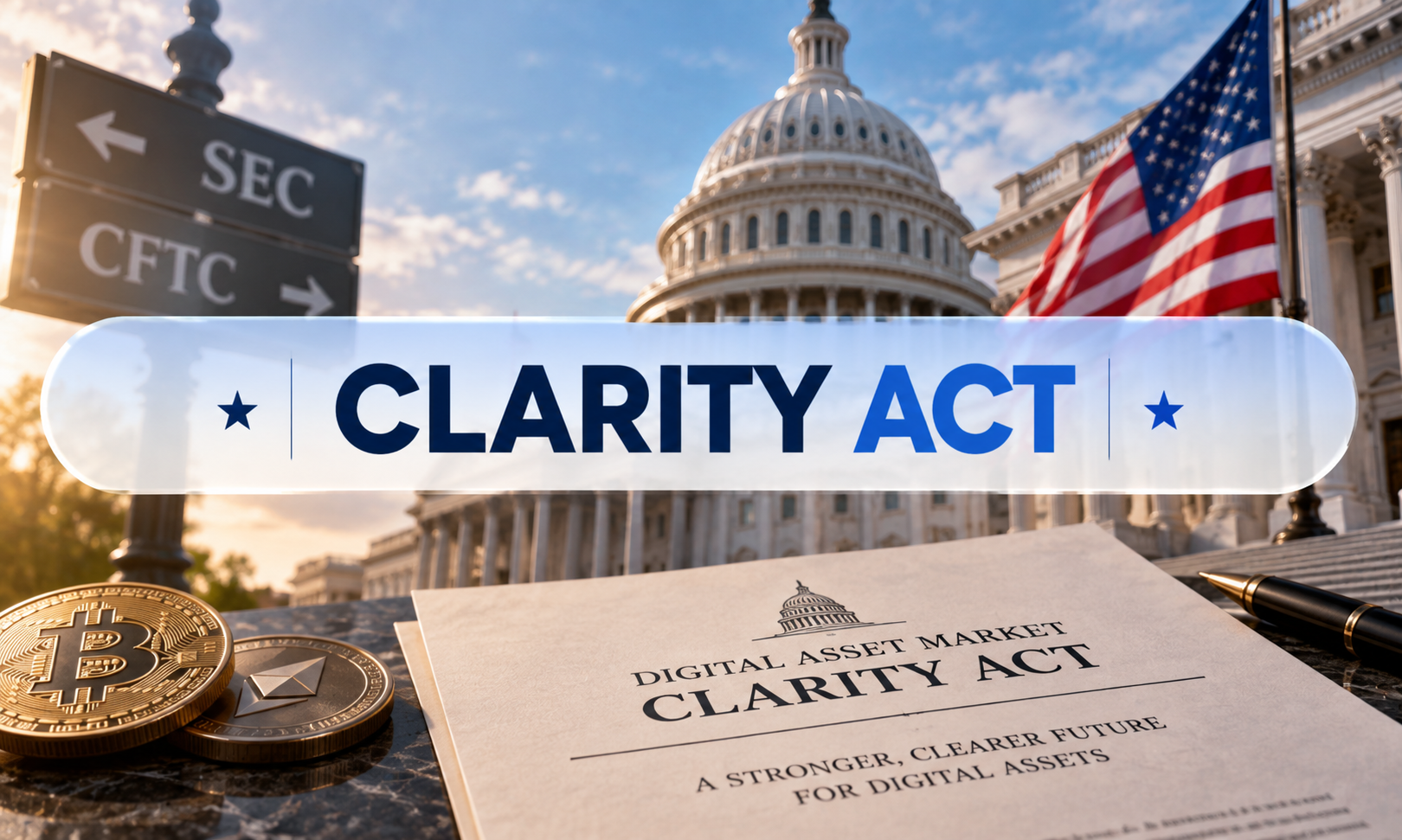
Bitwise CIO Matt Hougan says the CLARITY Act's failure gave crypto faster rules, while Michael Saylor argues for working with existing regulators.
Key takeaways
- The vote fell short. The CLARITY Act failed to get the 60 votes needed to move forward in the US Senate.
- Major coins rose. Bitcoin and Ethereum each rose about 11% after the vote, according to Hougan.
- Some tokens gained more. Hougan reported post-vote gains of 104% for NEAR, 49% for Uniswap, 19% for Pump, 15% for Hyperliquid, and 10% for Lighter as of Sept. 30.
What happened
The CLARITY Act did not get the 60 votes required to advance in the US Senate after years of negotiations. The Senate failed to move the bill forward in a Sept. 15 procedural vote. Bitwise CIO Matt Hougan published an analysis on Sept. 30 saying four crypto sectors gained business advantages from the failure.
Hougan wrote that crypto sacrificed long-term certainty and got better rules, faster. The crypto industry had strongly supported the bill, but the final version included compromises that could have created new restrictions for crypto companies.
Bitcoin and Ethereum each gained about 11% after the vote. Hougan said NEAR rose 125%, Uniswap 49%, and Avalanche 44%.
Why it matters
Stablecoin platforms kept the ability to offer rewards on balances. The bill would have stopped platforms from paying interest or rewards on stablecoin balances, with penalties reaching $5 million per violation. Hougan said this could benefit Coinbase, which uses stablecoin rewards to attract users.
Established exchanges such as Coinbase and Kraken avoid changes for now. CLARITY would have created a national licensing framework for spot crypto exchanges and placed limits on how exchanges combine trading and brokerage services.
Tokenization companies gained a testing opportunity. The SEC issued a five-year exemption for tokenized stock trading on Sept. 17. Hougan singled out Securitize as a beneficiary.
Revenue-generating tokens benefited from clearer regulatory guidance. The SEC clarified that announcing a buyback program does not by itself make a token a security.
What the data shows
As of Sept. 30, Hougan reported that NEAR gained 104%, Uniswap 49%, Pump 19%, Hyperliquid 15%, and Lighter 10% after the vote.
The other report says NEAR climbed 125%, Uniswap added 49%, and Avalanche gained 44%, according to Hougan.
Background
The GENIUS Act provides a separate ban on interest for issuers. It was enacted July 18, 2025.
Michael Saylor, co-founder and former CEO of Strategy, also sees the failure differently. He believes the sector should use the next few years to create compliant crypto products under current rules instead of rushing to accept a compromise.
What is still unclear
- The two reports give different post-vote gains for NEAR. Bitwise's analysis reported 104% as of Sept. 30, while the other report says NEAR jumped 125%.
- There is still a major risk as regulation can change when a new administration takes office. A future SEC or CFTC leadership could take a tougher approach to crypto.
- Hougan expects crypto to be too big to crush despite that risk.
Questions readers ask
What was the CLARITY Act?
The CLARITY Act was a bill that did not get the 60 votes needed to advance in the US Senate. It would have created a national licensing framework for spot crypto exchanges and placed limits on how exchanges combine trading and brokerage services.
Why did crypto rally after the CLARITY Act failed?
Bitwise CIO Matt Hougan said the final version of the bill included compromises that could have created new restrictions for crypto companies. With the bill stalled, current stablecoin rules stay in place, and exchanges do not face those changes for now.
What did the SEC do for tokenized stocks?
The SEC issued a five-year exemption for tokenized stock trading on Sept. 17. The exemption lets qualifying venues use permissioned automated market makers and liquidity pools.
What does Michael Saylor think about the CLARITY Act failure?
Michael Saylor, co-founder and former CEO of Strategy, believes the sector should use the next few years to create compliant crypto products under current rules instead of rushing to accept a compromise.
Sources · 5 publishers
-
 Clarity Act’s failure gave crypto ‘faster’ regulatory wins, Bitwise CIO says
 -
 Crypto May Be Better Off Without CLARITY Act, Says Bitwise CIO: ‘Too Big to Crush’
 -
 4 Crypto Sectors Gained From CLARITY Act Failure, Bitwise Says
 -
 Why crypto rallied after the CLARITY Act failed, according to Bitwise
 -
 CLARITY Act Failure Hands Coinbase a Stablecoin Reward Edge, Bitwise CIO Says