BTC $83,850
  ETH $2,588
  USDT $0.9999
  BNB $768.83
  XRP $1.45
  USDC $0.9999
  SOL $117.64
  TRX $0.3331
  FIGR_HELOC $1.04
 ZEC $1,320
 DOJ presses Tornado Cash prosecution as Treasury drops mixer reporting plan
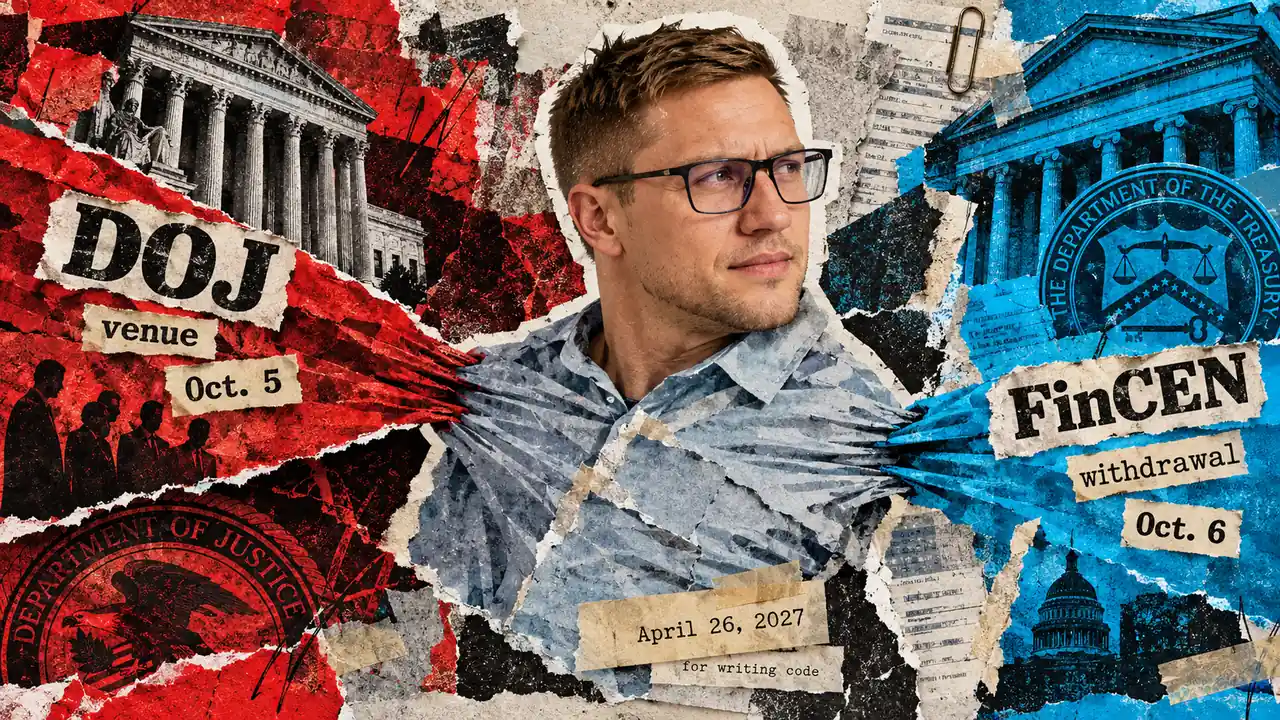
Prosecutors cite a Bitcoin Fog venue ruling against Roman Storm while FinCEN withdraws a proposed mixer reporting measure.
Key takeaways
- The retrial is set. A retrial on the deadlocked counts is scheduled for April 26, 2027, if those charges remain pending.
- One count already stuck. A jury convicted Storm in August 2025 on one money-transmission conspiracy count carrying a statutory maximum of five years.
- Venue is the dispute. The D.C. Circuit held that venue in Washington, D.C., was proper for all four counts in the Bitcoin Fog case.
What happened
Federal prosecutors asked Judge Katherine Polk Failla to reject Roman Storm's venue challenge on the money-laundering and money-transmission conspiracy counts, in a letter filed on Oct. 5. Storm co-founded Tornado Cash, a mixer that obscures transaction trails.
The letter cites the D.C. Circuit's Sept. 25 ruling in United States v. Sterlingov, which affirmed the convictions and sentence of Bitcoin Fog operator Roman Sterlingov. That court held venue in Washington, D.C., was proper for all four counts. For the money-laundering counts, it relied on evidence that an undercover agent made Bitcoin Fog transactions from his office in D.C., and for the unlicensed money-transmission counts it found enough evidence that Bitcoin Fog had served customers in the district.
Prosecutors say Tornado Cash activity in Manhattan was enough to establish venue in New York. They point to testimony from Shakeeb Ahmed, who said he used Tornado Cash from his Manhattan apartment. They argue that short-lived deposits can still help a mixer by adding to the pool of transactions used to hide the movement of funds.
A jury convicted Storm in August 2025 of conspiring to operate an unlicensed money-transmitting business but deadlocked on the money-laundering and sanctions-conspiracy charges. Storm filed his post-trial acquittal motion in September 2025, arguing that prosecutors failed to prove he intended to help criminals misuse Tornado Cash. Failla heard arguments on the motion in April 2026 and has not yet ruled. A retrial on the deadlocked counts is scheduled for April 26, 2027, if those charges remain pending.
Why it matters
The venue fight decides where the remaining counts can be tried. The filing landed as Treasury's Financial Crimes Enforcement Network moved to withdraw its 2023 finding and proposed enhanced reporting and recordkeeping measure for international cryptocurrency mixing. Storm criticized the new filing on X, writing that the DOJ is still coming after him with everything it has.
DOJ charging policy marks a boundary of its own. Deputy Attorney General Todd Blanche's April 7, 2025 memo directed prosecutors away from targeting mixers for their users' conduct or unwitting regulatory violations, but it expressly excludes section 1960(b)(1)(C), which concerns funds known to come from crime. In August 2025 remarks, DOJ official Matthew Galeotti described protection against new charges for qualifying software that is truly decentralized and leaves the third party without custody and control over user assets.
DOJ described Storm's conduct as building, maintaining and profiting from a service despite knowing it transmitted criminal proceeds. Storm contests criminal treatment of his developer activity, and the dispute over his intent sits alongside the narrower question of where the case can be heard.
Background
- FinCEN proposed enhanced reporting and recordkeeping requirements for international crypto mixing in 2023 and is now withdrawing that finding and proposal.
- Blanche's April 7, 2025 memo told prosecutors to step back from mixer cases based on users' conduct or unwitting regulatory violations and to review ongoing cases.
- Galeotti's August 2025 remarks set conditions for protection from new charges for software that is truly decentralized and leaves the third party without custody of user assets.
- The Bitcoin Fog appeal, decided Sept. 25, upheld the convictions and sentence of Roman Sterlingov and found Washington, D.C., a proper venue for all four counts.
What is still unclear
- Failla heard arguments on the acquittal motion in April 2026 and has not yet ruled, so the venue question remains open.
- A retrial on the deadlocked money-laundering and sanctions conspiracy counts is scheduled for April 26, 2027, but only if those charges remain pending.
- Whether the software work crossed the criminal boundary remains disputed, and the Aug. 25, 2026 court order cited the pending acquittal motion and a requested continuance.
Questions readers ask
What is Roman Storm charged with?
A jury convicted him in August 2025 of conspiring to operate an unlicensed money-transmitting business, and that count carries a statutory maximum of five years. The jury deadlocked on the money-laundering and sanctions-conspiracy charges, and a retrial is scheduled for April 26, 2027, if those charges remain pending.
Why is venue important in the Tornado Cash case?
Venue is where a case can legally be tried. Prosecutors say Tornado Cash activity in Manhattan was enough to establish venue in the Southern District of New York, pointing to Shakeeb Ahmed's testimony that he used the service from his Manhattan apartment, while Storm argued that use did not further the alleged conspiracy.
Did Treasury drop its crypto mixer rule?
Treasury's Financial Crimes Enforcement Network is withdrawing its 2023 finding and proposed enhanced reporting and recordkeeping measure for international cryptocurrency mixing. The withdrawal addresses an administrative reporting proposal and does not decide Storm's case.
What did the Bitcoin Fog ruling decide?
The D.C. Circuit upheld the convictions and sentence of Bitcoin Fog operator Roman Sterlingov and held that venue in Washington, D.C., was proper for all four counts. Prosecutors cite that ruling as supplemental authority against Storm's acquittal motion.