BTC $79,876
 ETH $2,310
 USDT $0.9987
 BNB $741.15
 XRP $1.29
 USDC $0.9993
 SOL $100.21
 TRX $0.3293
 FIGR_HELOC $1.02
 ZEC $1,220
Markets · Explained
Injective launches GPU rental index perpetuals with 10x leverage
A new onchain futures market lets traders bet on Nvidia GPU rental costs as AI infrastructure economics face scrutiny.
Key takeaways
- Broader index coverage. The five-chip index reflects GPU diversity used across AI training, model serving, and inference workloads, expanding beyond Injective's August 2025 H100-only market.
- Hedging utility. Developers facing rising rental bills and GPU providers concerned about revenue decline can use the futures market to manage exposure to price swings.
- Infrastructure economics pressure. The launch occurs as major cloud providers question whether GPU rental revenue can sustain the cost of building and operating computing infrastructure.
What happened
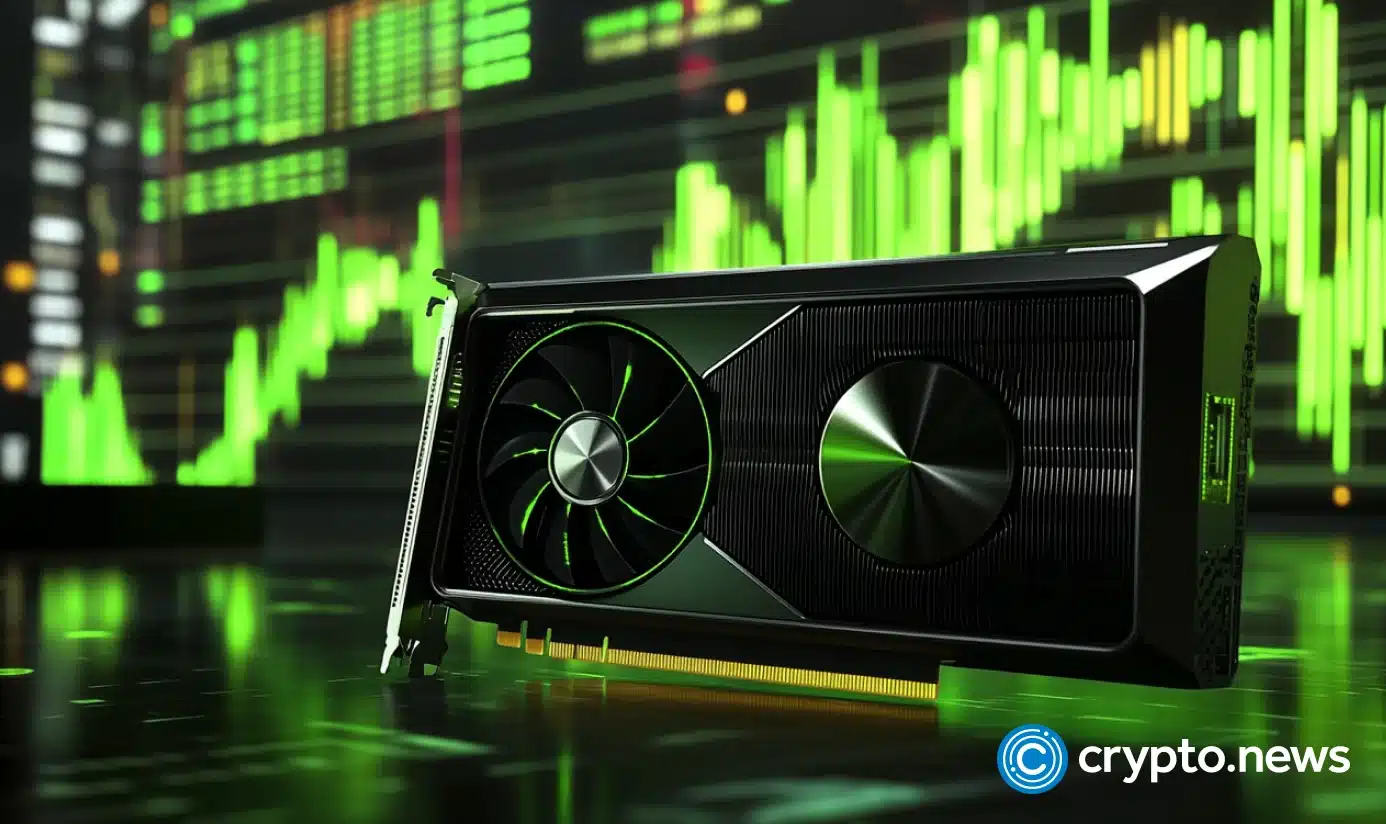
Injective has launched a perpetual futures market tracking rental prices for five Nvidia graphics processors, the Super Intelligence Compute Index, or SICI. The market allows traders to take leveraged positions on whether GPU rental costs will rise or fall, with up to 10x leverage available. Traders post USDC as margin and can integrate the market into applications across Injective's ecosystem.
The index tracks the H100, B200, H200, A100, and RTX 4090 chips, with weightings of 40%, 25%, 15%, 10%, and 10% respectively. London-based market data firm LO:TECH compiles hourly rental-price data from compute marketplaces, using a trailing seven-day average to calculate the index. The benchmark normalizes each GPU's reference price to 100 as of July 22, 2026, then combines the five weighted components into a single index level quoted in points.
The launch expands on Injective's August 2025 introduction of a single Nvidia H100 rental-price futures contract developed in collaboration with Squaretower. The new five-chip index broadens trader exposure to the full spectrum of GPU models used across AI infrastructure, from high-end training chips to consumer-grade processors rented for smaller workloads.
First $7.77Latest $7.95+2.3% over the period
Points are daily observations, not closing prices.
Why it matters
GPU rental costs represent a recurring expense for companies developing AI models. As rental prices fluctuate with demand for computing capacity, the perpetual futures market gives AI developers a tool to hedge against rising bills and infrastructure providers a way to protect against declining rental revenue. For traders, the market offers exposure to GPU economics without holding physical hardware or taking positions in individual companies.
The timing reflects broader anxiety about GPU infrastructure economics. Gartner warned in October that over 80% of specialist AI cloud providers could cease operating independently by 2030 as they struggle to generate sufficient returns on infrastructure investments. Meanwhile, major technology companies are restructuring operations to control costs while pouring tens of billions annually into AI data centers. Microsoft projected roughly $175 billion in capital expenditures for 2026, while Meta has already invested over $100 billion in AI infrastructure.
Background
GPU rental markets have emerged as companies choose to lease computing power from cloud providers like CoreWeave and Nebius rather than purchasing expensive Nvidia processors outright. This rental approach lets AI developers avoid massive upfront capital costs while giving GPU owners the ability to monetize their hardware investments. However, the business model's viability depends on maintaining rental utilization rates high enough to cover infrastructure costs, financing, and operating expenses.
Beyond derivatives, GPU-backed financing has grown as another financial instrument tied to computing hardware. Bullish announced a $100 million facility in August to finance loans secured by GPUs for middle-market AI infrastructure operators, with purchased equipment serving as collateral. Earlier GPU-backed financings included a $98.1 million loan secured by 2,304 Nvidia B300 units and a $34 million facility backed by 768 B200 units.
Injective has previously offered exposure to AI infrastructure through its AIX index perpetual, launched in January 2025, which combined AI-related tokens with equities including Nvidia and TSMC. The network's GPU rental derivatives represent a more targeted approach to capturing exposure to computing cost dynamics specifically.
What to watch
Injective announced plans to introduce another onchain financial product in the coming days following the SICI launch, suggesting the network is expanding its derivatives offerings around computing infrastructure. Meanwhile, Hyperliquid Policy Center submitted a request to the U.S. Commodity Futures Trading Commission in October for regulated GPU rental and AI inference cost perpetuals, indicating potential regulatory movement toward standardized computing-cost derivatives on traditional exchanges.
Questions readers ask
How is the Super Intelligence Compute Index calculated?
LO:TECH gathers rental prices in dollars per GPU-hour from compute marketplaces for each of the five Nvidia chips. Each marketplace is counted once per chip, and prices undergo validation and outlier checks. The methodology rebases each GPU's reference price to 100 as of July 22, 2026, then combines the five components using assigned weights to produce a trailing seven-day average of hourly basket levels. The index is updated hourly and quoted in index points.
Why include the consumer-grade RTX 4090 in an enterprise GPU index?
Injective included the RTX 4090 because developers rent those cards to run open-source models and smaller AI workloads, reflecting a broader spectrum of inference and development use cases beyond large-scale training jobs handled by enterprise chips.
What happens if Injective changes the index methodology?
According to Injective's announcement, methodology changes will create a separate index version rather than replacing the existing live series. This preserves the historical calculation and data continuity of the original SICI.