BTC $67,998
 EQQQQ $655.75 Last updated 8 Nov 2026, 12:03 UTC
 ETH $1,920
 MGLOEURO $111,813
 USDT $0.9991
 BNB $627.29
 USDC $0.9995
 XRP $1.01
 SOL $77.40
 TRX $0.3120
Technology · Explained
OpenAI launches ChatGPT Wallet for agent purchases with major card networks
The US rollout lets ChatGPT Pro users approve agent-initiated purchases through tokenized Visa, Mastercard and American Express cards.
Key takeaways
- Limited launch. Wallet is initially available only to US ChatGPT Pro subscribers age 18 or older with eligible US-issued cards, and only in dot conversations.
- Tokenized checkout. Payment networks generate substitute credentials so agents and merchants do not see actual card numbers.
- Future delegation. OpenAI plans to let users set spending limits, categories or time periods and preapprove agent purchases within them.
What happened
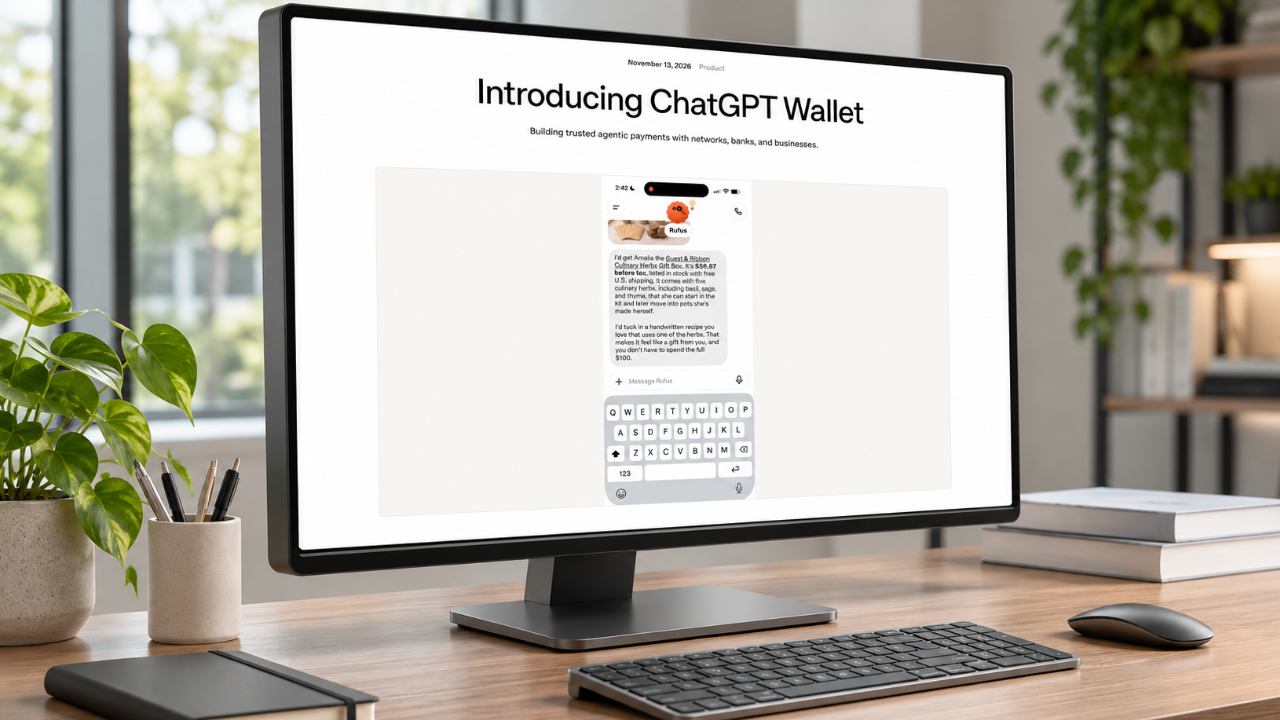
OpenAI introduced ChatGPT Wallet on Nov. 13, a feature that allows software agents to complete purchases on a user's behalf using existing card networks. The company worked with American Express, Chase, Mastercard and Visa on the launch, according to Cointelegraph and Bitcoin.com News. Access is limited at first to US ChatGPT Pro subscribers with supported US-issued cards, and the wallet works only inside conversations with dots, OpenAI's personal agents, rather than in Chat, Work or standalone Codex threads.
At checkout, the user reviews the item, total and selected card, then approves the payment with Face ID or another supported biometric check. The card network then issues a payment token containing substitute card details, including a card number, security code and expiration date, for the merchant to process. The actual card information is not exposed to the agent or the seller, OpenAI said.
The dots are designed to work around the clock on their own cloud computers and can connect to apps through plugins. Users can reach a dot through ChatGPT, Slack or Teams, and Custom Rules can allow actions, block them or require approval for specific cases. OpenAI said the wallet is available only to users age 18 or older with a US billing address; Chase customers must be the primary account holder.
OpenAI plans to expand the wallet beyond per-purchase approval eventually. The company has described a model in which users set spending limits, permitted categories or time periods and preapprove agent purchases within those boundaries. For now, card issuers handle declined, disputed or unrecognized charges, while merchants manage cancellations, returns and refunds. OpenAI said it generally does not decide or fund merchant refunds or card chargebacks unless legally required or separately promised.
Why it matters
The wallet moves ChatGPT from product research and recommendations into checkout, a step that could shorten the path between an AI conversation and a completed sale. OpenAI said ChatGPT has 1.2 billion weekly users, many of whom use it to compare products and options. If agent-led buying becomes common, card networks, merchants and fraud systems will need to distinguish trusted agent traffic from unwanted automated activity.
The feature also puts privacy and liability questions at the center of agent commerce. Tokenization reduces card-data exposure, but the wallet's privacy notice says OpenAI collects purchase, contact and device information, while its payment provider collects the full card number. OpenAI receives a tokenized credential and limited card details, and says wallet information is not sold or shared for targeted advertising. Responsibility for disputes and refunds remains split among issuers, sellers and the platform.
What the data shows
Juniper Research estimated in an April report that global agentic commerce transaction value would reach $1.5 trillion by 2030, up from an estimated $8 billion in 2026. OpenAI said its dots can connect to more than 4,000 apps through plugins. At launch, the wallet is restricted to US Pro subscribers and dot conversations, a narrower scope than the broader ChatGPT product.
Background
OpenAI is entering a crowded field of agent-payment projects. Google introduced its Agent Payments Protocol in 2025, while Visa and Mastercard have developed frameworks for transactions initiated by software agents. Cloudflare announced an authentication collaboration with the three major card networks in October 2025, using Web Bot Auth to help websites identify trusted agent traffic. Mastercard's Agent Pay framework requires agents to register and be verified, with consumers controlling permitted purchases, and its agentic tokens build on technology already used for contactless payments and saved cards. Visa has also invested in Replit and worked to integrate Visa Intelligent Commerce into the development platform.
Crypto firms are pursuing parallel approaches. Coinbase introduced its x402 protocol in 2025 to enable autonomous stablecoin payments for digital services, while Circle launched Agent Stack in May, allowing agents to hold and spend USDC within predefined limits. Crossmint combines stablecoin wallets with traditional card networks. MoonPay launched PayBox in July, connecting to ChatGPT and Claude through a custom connector; users can require passkey approval for each transaction or authorize actions within preset limits.
What to watch
Watch how quickly OpenAI moves from approval-per-purchase to preauthorized spending, and whether merchants accept agent-initiated checkouts at scale. OpenAI has acknowledged that merchant security systems can block agents or decline legitimate purchases; its Commerce Partner Playbook addresses product information, website access and payment compatibility. Also worth tracking is how card issuers, sellers and OpenAI divide responsibility when an agent buys the wrong item, a charge is disputed or a refund is requested. The reports did not specify fees or commercial terms for the wallet.
Questions readers ask
Who can use ChatGPT Wallet at launch?
It is available to US ChatGPT Pro subscribers age 18 or older with a US billing address and supported US-issued American Express, Chase, Mastercard or Visa cards. Chase cardholders must be the primary account holder, and the wallet works only in dot conversations.
Do AI agents see the user's card number?
No. A payment network supplies a tokenized credential with substitute card details for checkout, keeping the actual card information hidden from the agent and merchant. OpenAI receives the tokenized credential and limited card details.
Can an agent buy something without the user approving each time?
Not at launch. Each purchase requires the user to review the item, total and card, then approve with Face ID or another supported biometric check. OpenAI plans to support preapproved purchases within preset spending limits, categories or time periods later.