BTC $74,856
 EQQQQ $655.75 Last updated 8 Nov 2026, 12:03 UTC
 ETH $2,129
 MGLOEURO $111,813
 USDT $0.9991
 BNB $689.77
 USDC $0.9995
 XRP $1.10
 SOL $86.87
 TRX $0.3166
Hacks & Security · Explained
US sanctions 41 firms accused of sustaining Prince Group scam network
Treasury's Nov. 5 action targets four people and 41 entities it says managed offshore structures and hid ownership after earlier Prince Group designations.
Key takeaways
- Who was named. Qiu Yong, Zhao Mengyao, He Yujing and Visal Pang were designated alongside 41 entities.
- Why companies matter. Enforcement is aimed at the corporate layer behind the scams, not only at wallets receiving funds.
- Ownership still counts. OFAC's 50 Percent Rule means firms owned half or more by blocked persons are also caught.
What happened
The US Treasury's Office of Foreign Assets Control designated four individuals and 41 companies on November 5, 2026, saying the corporate network allowed Prince Group to keep operating after earlier sanctions. OFAC has classified Prince Group as a transnational criminal organization. CryptoSlate reported the designations, which block covered assets and carry reporting duties for US persons.
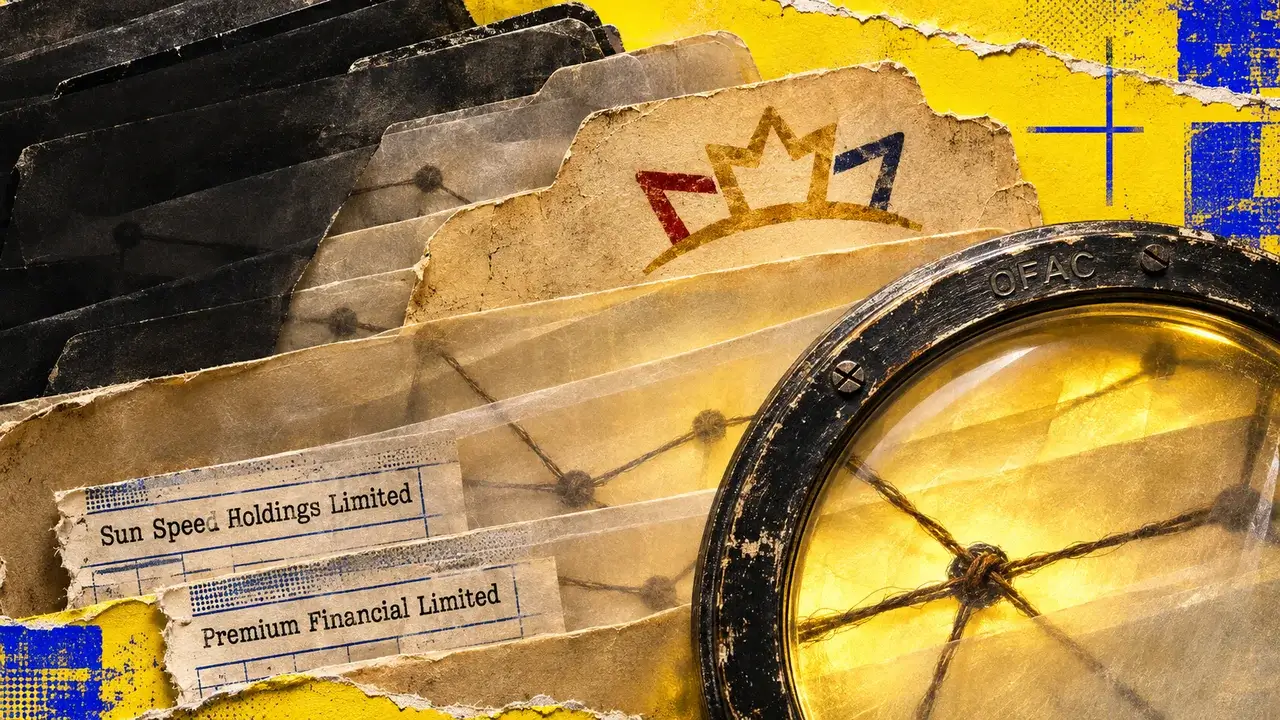
The named individuals are Qiu Yong, Zhao Mengyao, He Yujing and Visal Pang. Treasury describes Qiu as the ultimate owner of Hong Kong money lender Premium Financial Limited, reached through Sun Speed Holdings Limited, a British Virgin Islands company, and says he also controls other BVI and Hong Kong companies on Prince Group's behalf. Zhao is described as Qiu's personal assistant and as secretary and co-director of several Hong Kong companies he controls.
He Yujing is the wife of Prince Group executive Chen Bo, who Treasury says transferred ownership of a Tokyo mansion to her after the October 2025 sanctions round. Pang is said to control 11 Cambodian companies, several of them co-directed with Chen. The action also names companies linked to previously sanctioned executives Dai An and Thet Li, including Singapore-based Greenbay Multi Media, which Treasury says Thet Li wholly owns.
Why it matters
The designations show enforcement reaching the corporate scaffolding behind online fraud rather than only the wallets that receive stolen funds. According to NewsBTC, the action ties alleged digital asset fraud to offshore companies, nominee ownership and payment facilitators, which is why a case often described as a cryptocurrency scandal can also turn on property firms, corporate agents and ordinary commercial intermediaries. Public blockchain records alone rarely show who arranged a structure or who authorised an account.
For businesses, the practical question is whether a listed name, alias or beneficial owner sits inside an existing relationship. Because the standing 50 Percent Rule captures entities owned directly or indirectly, individually or in aggregate, by blocked persons, a counterparty can face a sanctions problem without any direct transfer to a known illicit wallet. NewsBTC also noted that the announcement is not a finding that every customer or employee of a named commercial organisation took part in a scam, so accurate identification cuts both ways.
What the data shows
One ownership path set out by Treasury runs from Qiu Yong through Sun Speed Holdings Limited in the British Virgin Islands to Premium Financial Limited, a Hong Kong money lender. CryptoSlate noted that the published diagram is a selected path inside a larger network and does not attach share percentages to it. The figures in the announcement are four individuals, 41 entities, 11 Cambodian companies attributed to Pang, and two prior Prince Group designation dates.
Background
The November action follows earlier Prince Group designations on October 14, 2025 and June 23, 2026. Treasury links the group's affiliates to digital asset investment scams, romance scams and other online fraud, with many operations relying on trafficked and coerced workers in Southeast Asian compounds.
NewsBTC reported that the same announcement named a Malaysian individual it says operated a network of scammers based in Madagascar, and credited law enforcement with overseas authorities including partners in the British Virgin Islands and the United Kingdom. The outlet framed the wider lesson as crypto-enabled scams being an organised financial crime problem with real-world corporate infrastructure.
What to watch
OFAC's guidance calls for ownership due diligence on entities involved in transactions and account relationships, so the next phase is likely to be felt by exchanges and payment firms checking whether counterparties trace back to newly blocked people. CryptoSlate also noted that transaction prohibitions keep their general or specific licence and exemption qualifications and their stated US jurisdictional scope. Violations can bring civil or criminal penalties, with civil penalties possible on a strict liability basis.
Questions readers ask
What does a US sanctions designation actually block?
Property and interests in property held in the United States, or in the possession or control of US persons, are blocked and must be reported to OFAC. Dealings are generally prohibited unless a licence applies or an exemption covers them.
Why are companies sanctioned alongside individuals?
Treasury says the firms helped Prince Group manage offshore structures, conceal beneficial ownership and maintain commercial activity after earlier designations, so the corporate layer is treated as part of the network.
Should fraud victims expect funds back?
NewsBTC advised victims to keep transaction identifiers, messages and platform details and report them to official authorities, and warned against paying third parties promising guaranteed recovery.