BTC $80,417
  ETH $2,356
  USDT $0.9991
  BNB $731.05
  XRP $1.27
  USDC $0.9997
  SOL $101.16
  TRX $0.3296
  FIGR_HELOC $1.02
  ZEC $1,145
 Bitcoin slips below $84,000 ahead of August PCE inflation data
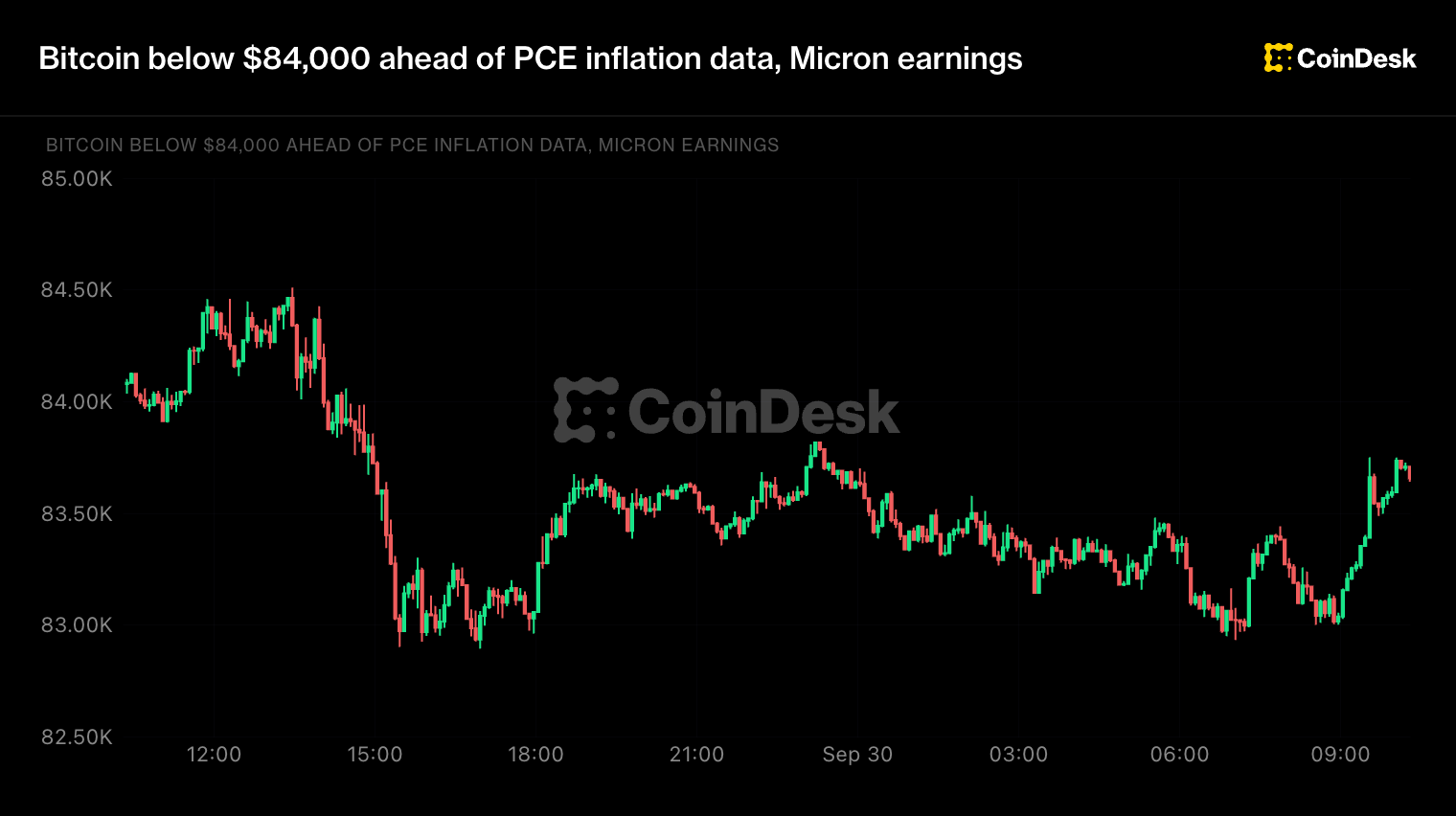
Traders waited for the August core PCE report and Micron's results while Bitcoin held near $83,000.
Key takeaways
- Spot demand is shrinking. CryptoQuant estimates Bitcoin's spot demand has shrunk by about 170,000 BTC over the past 30 days.
- Rate odds fell fast. Fed funds futures imply a 54% probability of an October hike, versus 75% a day earlier.
- The range is tight. Bitcoin traded at $83,000, just 0.71% above its $82,700 24-hour low.
What happened
Bitcoin slipped 0.3% to about $83,700 early Wednesday, U.S. time, CoinDesk reported. A separate Cryptonews.com report put Bitcoin at $83,000 ahead of the August core PCE release and said that level sat 0.71% above the $82,700 24-hour low.
Ether fell 0.7% to about $2,690. HYPE dropped nearly 2%, the worst among the majors, while XRP and TRX each added under 1%, according to CoinDesk data.
Traders are waiting on the personal consumption expenditures price index, the Federal Reserve's favored inflation gauge, which is expected to show inflation quickened in August. The Bureau of Economic Analysis was scheduled to publish its August Personal Income and Outlays report at 8:30 a.m. ET on September 30.
Onchain analysis firm CryptoQuant estimates that Bitcoin's spot demand has shrunk by about 170,000 BTC over the past 30 days. Growth in futures demand has dropped 90% since Sept. 14.
Micron Technology reports after the U.S. close. Its results are a test for the AI-linked stocks that kept the S&P 500's losses in check through the bond selloff.
Why it matters
Rate expectations are the main channel between the inflation data and Bitcoin. Fed funds futures imply a 54% probability of an October hike, versus 75% the day before. The Fed raised its policy rate by 25 basis points in September, and a majority of officials who submitted projections expected at least one further move in 2026.
The Federal Reserve explicitly ties its 2% inflation target to PCE. The 10-year US Treasury yield had touched around 5.27%, its highest level since June 2007, according to the source analysis. Higher yields and persistent inflation can reinforce the same headwind for Bitcoin by lifting the return available on interest-bearing assets.
A higher-than-expected inflation reading would add to the bets on rate hikes that drove a bruising bond selloff this month. The next meetings were listed for October 27, 28 and December 8, 9, making the August inflation report an important input ahead of the October decision.
What the data shows
The latest confirmed core PCE reading cited in the analysis was July's 3.3% year over year and 0.2% month over month. For August, published forecasts ranged from 0.3% to 0.5% month over month, with estimates around 3.4% for core PCE and 3.8% for headline PCE year over year.
Cryptonews.com framed the immediate question as whether a monthly reading between 0.3% and 0.5% would move Federal Reserve expectations enough to push BTC below that low.
Background
Brent crude rose above $103 a barrel and is up about 14% in September, even though Middle East crude flows are returning to pre-war levels. Treasuries steadied a day after 30-year yields hit their highest since 2002, and the dollar held near its highest since July.
What is still unclear
- The August inflation result has not yet been confirmed, so the forecast spread remains a spread and not an outcome.
- The monthly forecast range covers outcomes with different implications for whether the Fed can wait at its October meeting or faces pressure to act again.
Questions readers ask
Why is Bitcoin below $84,000?
CoinDesk reported Bitcoin slipped 0.3% to about $83,700 early Wednesday as traders waited on the PCE price index. Cryptonews.com reported Bitcoin trading at $83,000, 0.71% above its $82,700 24-hour low.
What is the PCE price index?
It is the Federal Reserve's favored inflation gauge, according to CoinDesk. The Fed explicitly ties its 2% inflation target to PCE, which makes the price trend relevant to rate expectations.
When is the August PCE report released?
The Bureau of Economic Analysis was scheduled to publish its August Personal Income and Outlays report at 8:30 a.m. ET on September 30.
When does Micron report earnings?
Micron Technology reports after the U.S. close, per CoinDesk. Its results are a test for the AI-linked stocks that kept the S&P 500's losses in check through the bond selloff.