BTC $80,372
  ETH $2,332
  USDT $0.9991
  BNB $739.03
  XRP $1.30
  USDC $0.9996
  SOL $100.94
  TRX $0.3290
  FIGR_HELOC $1.06
  ZEC $1,215
 Community bankers sue US banking regulator over crypto trust charters
The Independent Community Bankers of America asks a federal court to set aside an OCC rule and letter that let crypto firms hold national trust charters.
Key takeaways
- 21 charters, 13 crypto. By ICBA's count, the OCC has granted full or conditional approval to 21 trust banks, and at least 13 of them are crypto companies.
- Two banks lost clients. Two member banks with under $2.5 billion in assets each lost business worth hundreds of thousands of dollars this year to crypto firms with conditional OCC approval.
- Close to $2 trillion. The OCC says existing national trust banks already hold close to $2 trillion in assets under custody or safekeeping.
What happened
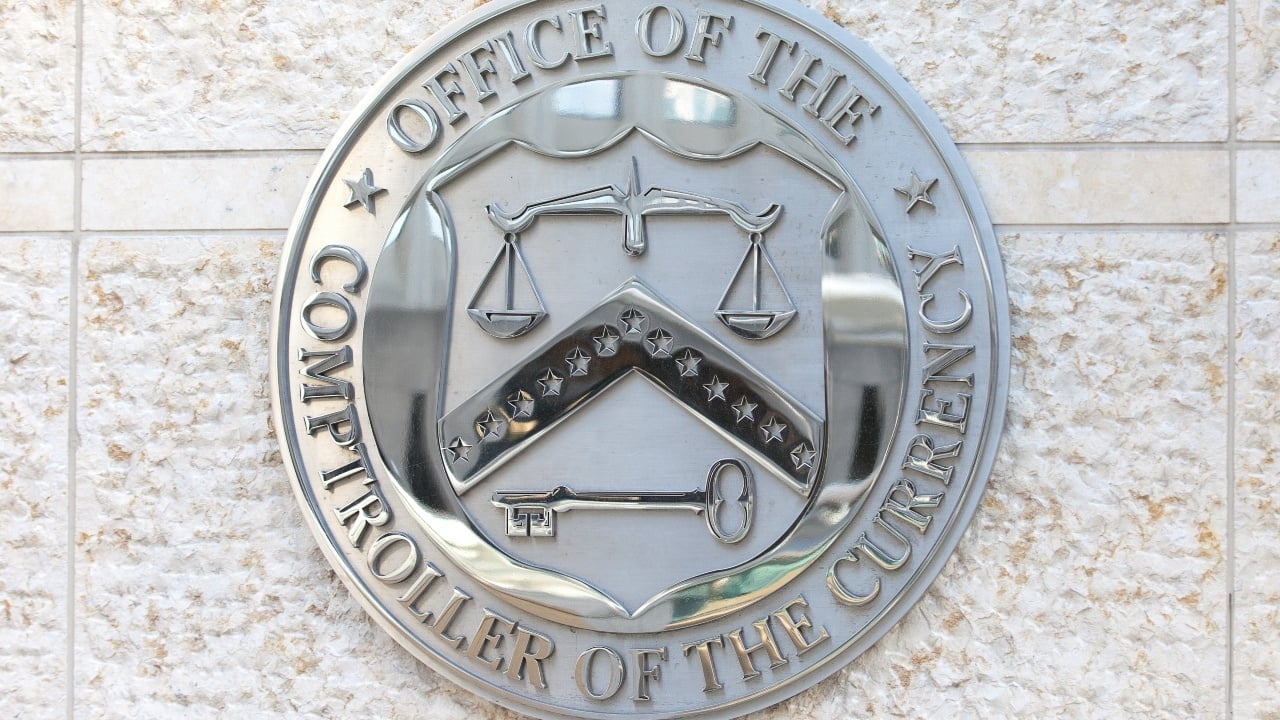
The Independent Community Bankers of America took the Office of the Comptroller of the Currency to federal court. The complaint was filed Oct. 2 in the District of Columbia's federal district court and names the OCC and Comptroller Jonathan Gould as defendants.
The suit, brought under the Administrative Procedure Act, asks the court to set aside three OCC actions. They are the National Bank Chartering final rule published March 2, 2026, Interpretive Letter 1176 issued in January 2021, and the conditional charter granted to digital asset firm Protego in February 2026. The ICBA also wants the OCC barred from using the rule or the letter to approve other charters.
The ICBA argues the OCC exceeded the statutory authority Congress granted under the National Bank Act by letting crypto companies secure federal trust charters without performing traditional fiduciary duties. The group says the charters open a loophole, because digital asset firms gain the reach of a federal banking license without standard capital, liquidity, consolidated supervision or Community Reinvestment Act obligations, and without FDIC coverage.
By ICBA's count, the OCC granted full or conditional approval to 21 trust banks during the Trump administration, and at least 13 of them are crypto companies. Crypto companies that have secured approval include Circle, Coinbase and Ripple.
Why it matters
The ICBA calls the arrangement a gaping hole in financial regulation. Rebeca Romero Rainey, its president and chief executive, said American consumers reasonably expect a federally chartered bank to carry federal protections, and that digital assets held at a crypto firm operating under a national trust charter do not carry those safeguards.
The case tests whether crypto firms can keep using national trust charters as a route into federal banking. If the court rules for the ICBA and vacates the OCC's trust rule, crypto infrastructure providers, stablecoin issuers and custody platforms on conditional charters could be required to restructure their federal operations.
The lawsuit drew pushback from parts of the crypto industry. Cody Carbone, chief executive of The Digital Chamber, wrote on X that community banks are ready to compete, while the trade group lobbies Washington to block competition.
What the data shows
- The OCC has granted full or conditional approval to 21 trust banks during the Trump administration, and at least 13 of them are crypto companies by ICBA's count.
- Existing national trust banks already have close to $2 trillion in assets under custody or safekeeping, the OCC noted.
- Two member banks with under $2.5 billion in assets apiece have each already lost business worth hundreds of thousands of dollars this year to crypto firms holding conditional OCC approval.
- Protego's first conditional approval, granted in 2021, expired in 2023, the same year the company cut more than half its staff.
Background
- The lawsuit came months after Senator Elizabeth Warren of Massachusetts accused the OCC of illegally granting banking charters to crypto companies.
- The ICBA has also joined other bank groups in Congress in urging senators to tighten stablecoin yield limits in the CLARITY Act, which stalled in a Senate procedural vote last month.
What is still unclear
- The court has not ruled on the challenge, and the reports do not say when it will.
- The reports do not say whether the OCC will change the final rule or Interpretive Letter 1176 while the case proceeds.
- The reports do not say what Protego plans to do with its conditional charter.
Questions readers ask
What is the ICBA suing the OCC over?
The ICBA wants a federal court to set aside the OCC's National Bank Chartering final rule, Interpretive Letter 1176 and the conditional charter granted to digital asset firm Protego. It argues the OCC exceeded the authority Congress granted under the National Bank Act.
How many crypto trust charters has the OCC approved?
By ICBA's count, the OCC has granted full or conditional approval to 21 trust banks during the Trump administration, and at least 13 of them are crypto companies. Crypto companies that have secured approval include Circle, Coinbase and Ripple.
What happens if the ICBA wins the case?
If the court rules for the ICBA and vacates the OCC's trust rule, crypto infrastructure providers, stablecoin issuers and custody platforms operating under conditional charters could be required to restructure their federal operations.
Why do community bankers call the charters a loophole?
They say digital asset firms gain the reach of a federal banking license without standard capital, liquidity, consolidated supervision or Community Reinvestment Act obligations, and without Federal Deposit Insurance Corporation coverage.