BTC $82,035
  ETH $2,437
  USDT $0.9990
  BNB $727.22
  XRP $1.33
  USDC $0.9996
  SOL $105.30
  TRX $0.3342
  FIGR_HELOC $1.03
  ZEC $1,223
 Google claims quantum advance as bitcoin faces distant Q-Day risk
Google reported cleaner magic states on Willow, a step toward fault-tolerant machines that could one day test BTC signatures.
Key takeaways
- Errors fell sharply. Tests showed a 40-fold drop in errors with 99.99% fidelity.
- Bitcoin risk stays distant. Breaking signatures would need 500,000 physical qubits and 1,200-1,450 logical qubits.
- Exposure is limited. About 6.9 million BTC face exposure through revealed keys.
What happened
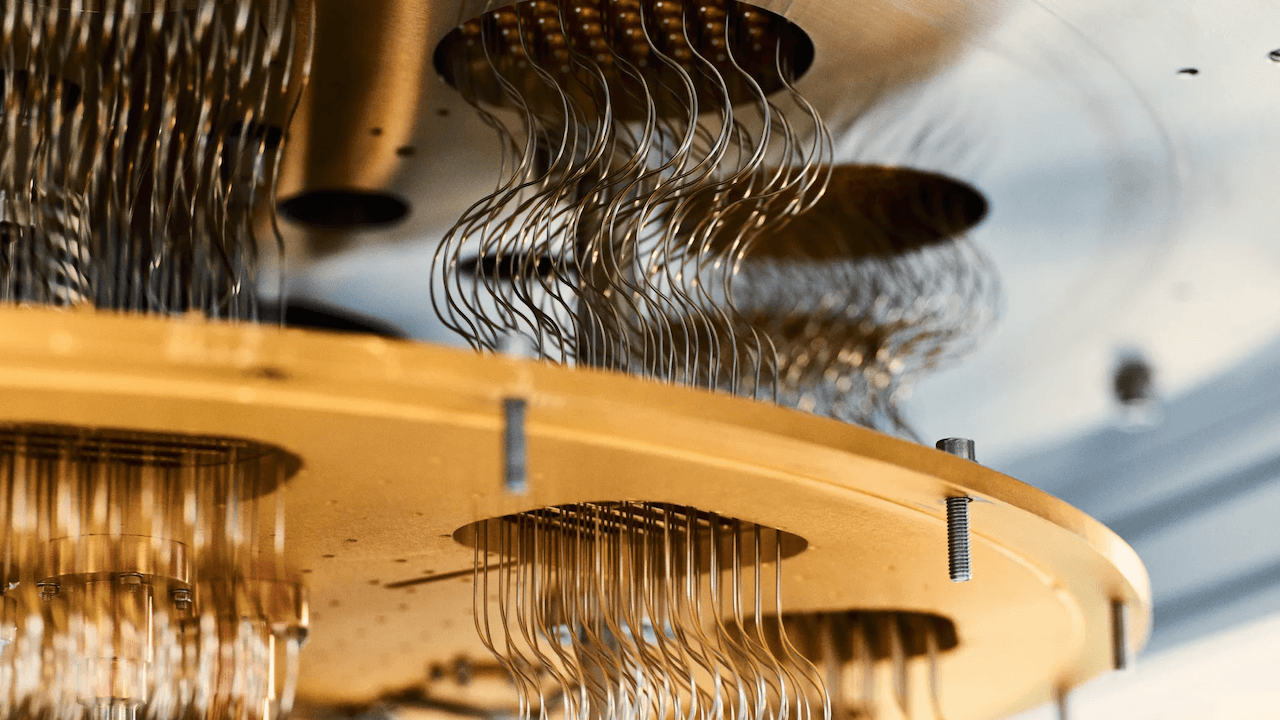
Google reported progress on error control for quantum hardware. Its team applied a cultivation process for magic states on the Willow chip. The method starts with an imperfect state in a compact area, checks it with linked measurements, and discards bad runs. The lab said treated states had far fewer faults than untreated states, citing a 40-fold improvement. It also reported 99.99% logical fidelity for T states, equal to an error of 1 in 10,000. The work appeared in Science.
Google framed the result as a move toward stable machines that correct their own faults. The team also showed clean states can shift between correction layouts, which helps larger designs. Earlier estimates placed the share for magic-state creation near 95%. The new setup used a share of the 105 physical qubits, leaving more room for actual work. The company stressed that hurdles remain before practical, fault-tolerant systems arrive.
First $84.4KLatest $82.3K-2.6% over the period
Points are daily observations, not closing prices.
Why it matters
The result matters for BTC because strong quantum systems could weaken signature safety. A March study from Google researchers said cracking signatures might need under 500,000 physical qubits, about 20 times below prior guesses. It described a case where a disclosed public key could yield a private key in roughly nine minutes, fast enough to target unconfirmed transfers. The pool with disclosed keys was put near 6.9 million BTC, tied to early formats and reused addresses.
No machine today can run such an attack, and Google said its latest test does not crack BTC protection. Another put the need at at least 1,200-1,450 stable logical qubits. That compares with the current 105. In September, Fidelity Digital Assets warned that future systems able to read disclosed public keys could recover private keys. It reviewed new signature options and noted trade-offs for speed and fees.
Background
Several projects promote designs meant to resist quantum attacks. Reports point to lattice-based signatures and hash-based methods. Algorand was listed with a market cap of $1.07 billion and uses lattice-based signatures. Mochimo runs a live mainnet since 2018 with hash-based cryptography. The reports present these approaches as ways to avoid later fixes for weak cryptography.
Analysts note that larger signatures could slow the network and raise costs. Fidelity Digital Assets examined systems including a proposal called SHRINCS. The firm said bigger signatures could reduce transaction throughput and increase fees. That trade-off explains why developers weigh safety against performance when reviewing upgrades.
What is still unclear
- It stays unclear when fault-tolerant machines able to threaten BTC will arrive, since Google says hurdles remain.
- It stays unclear how BTC would adopt larger quantum-safe signatures without loss of throughput or higher fees.
Questions readers ask
Can quantum computers break Bitcoin now?
No. Reports say no current machine can run such attacks, and Google says its latest test does not break BTC cryptography.
What did Google announce?
Google said its team produced magic states on Willow with a 40-fold error drop and 99.99% fidelity. It also moved clean states across correction layouts to aid scaling.
Which blockchains claim quantum resistance?
Reports name Algorand, which uses lattice-based signatures, and Mochimo, live since 2018 with hash-based cryptography. Algorand was listed with a $1.07 billion market cap.