BTC $77,038
 ETH $2,265
 MGLOEURO $111,813
 USDT $0.9986
 BNB $696.82
 XRP $1.26
 USDC $0.9993
 SOL $92.43
 TRX $0.3219
 FIGR_HELOC $1.07
Bitcoin · Explained
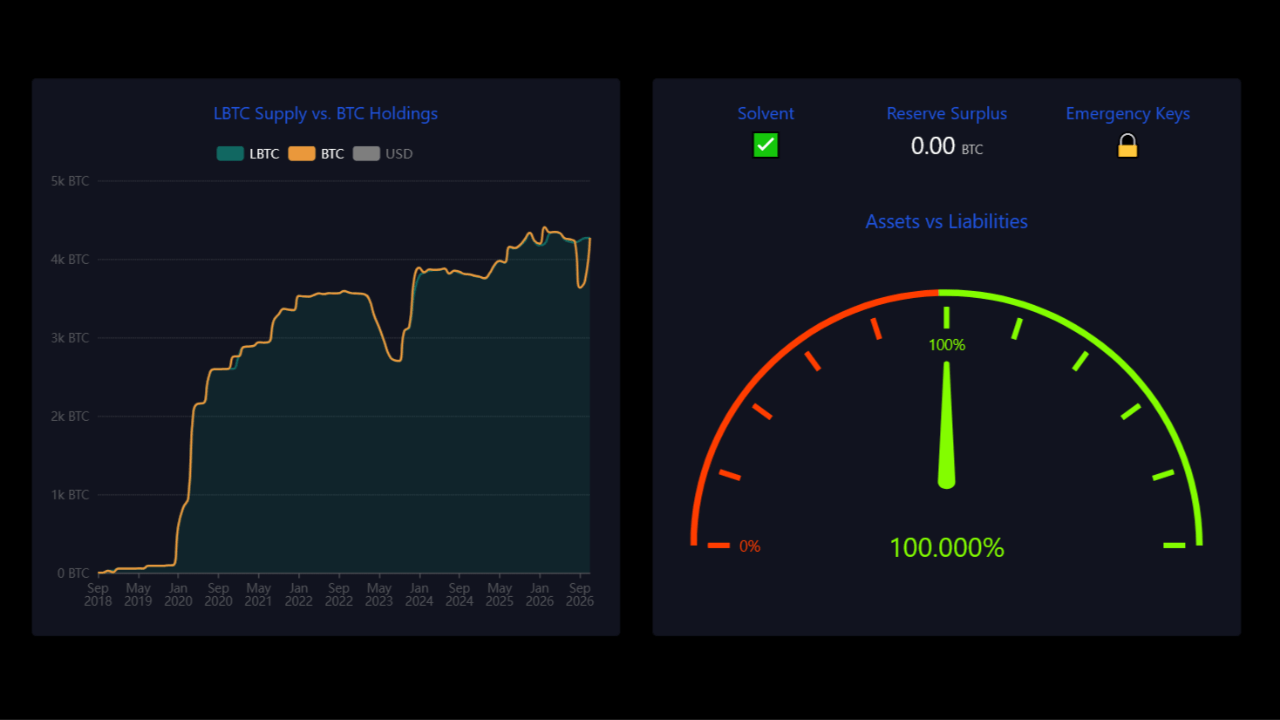
Liquid Network restores full Bitcoin reserves, re‑establishing 1, 1 LBTC backing
The Liquid sidechain has replenished the 600‑BTC shortfall, bringing its LBTC token back to full Bitcoin collateral after the September hack.
Key takeaways
- Reserve restoration. Liquid Network added 250 BTC on Nov 2, closing the remaining gap and confirming a 1:1 BTC‑LBTC peg.
- Future safeguards. The federation will modernize governance and introduce additional technical controls to prevent similar incidents.
What happened
The Liquid Network, a Bitcoin sidechain operated by the Liquid Federation, confirmed on November 2 that its Bitcoin reserves are fully replenished. After a vulnerability in the Elements software was exploited in early September, the network lost roughly 4,000 BTC, of which about 600 BTC remained missing for almost two months. The final top‑up of 250 BTC, announced by former Blockstream security chief Samson Mow on X, eliminated the remaining shortfall, restoring the promised 1:1 backing for every LBTC token in circulation.
According to the federation's public dashboard, the network now holds 4,270.54 LBTC, valued at roughly $327 million, matched by an equal amount of Bitcoin. The restoration follows earlier swaps between BTC and LBTC that resumed weeks before the reserve announcement, allowing users to move funds at a 1:1 rate through participating swap providers. The federation's proof‑of‑reserves data is independently verifiable, and node operators can confirm the balance directly on the network's explorer.
The team did not disclose the source of the additional Bitcoin, nor have they released a detailed post‑mortem of the September breach. However, they emphasized that the incident has prompted a review of governance and operational procedures. In the coming weeks, the federation expects to publish further details on these reforms, aiming to strengthen oversight and introduce new safeguards for the network's participants.
First $86.5KLatest $76.9K-11.1% over the period
Points are daily observations, not closing prices.
Why it matters
Restoring the full reserve eliminates the primary risk that LBTC could become under‑collateralized, which would undermine confidence in the sidechain's stability and its utility for traders and institutions. A fully backed LBTC token reassures users that conversions to Bitcoin remain reliable, supporting liquidity on the network and preserving its role as a fast, confidential settlement layer for Bitcoin transactions.
Background
Liquid Network operates as a federated sidechain to Bitcoin, using the Elements protocol to enable faster transactions, confidential transfers, and token issuance. The federation consists of 81 members, including exchanges, custodians, and infrastructure providers such as Hodl Hodl, Specter, Coinshares, Komainu, Xapo, Bull Bitcoin, and Ledger. In September, an attacker exploited a bug that allowed the creation of approximately 4,000 LBTC without the requisite Bitcoin backing. The attacker returned most of the stolen funds the next day but retained about 600 BTC as a bounty for discovering the vulnerability. Since then, swap providers have gradually restored BTC‑LBTC conversion services, and the federation has been working to rebuild the missing reserves.
What to watch
Observers should monitor the federation's upcoming governance reforms, particularly how responsibilities and oversight are redistributed among the 81 members. The effectiveness of new technical safeguards, such as stricter multi‑signature requirements and enhanced monitoring of the Elements codebase, will be critical to preventing future exploits. Additionally, the community will be watching for a formal post‑mortem report that details the root cause of the September breach and outlines remediation steps.
Questions readers ask
Will LBTC continue to be fully backed by Bitcoin after the recent reserve restoration?
Yes. The federation's latest proof‑of‑reserves data shows that every LBTC in circulation is matched by an equal amount of Bitcoin, re‑establishing the 1:1 peg.