BTC $76,887
 ETH $2,261
 MGLOEURO $111,813
 USDT $0.9990
 BNB $692.47
 XRP $1.25
 USDC $0.9995
 SOL $91.84
 TRX $0.3224
 FIGR_HELOC $1.03
Exchanges · Explained
Moscow Exchange sets Dec. 1 launch for bitcoin, ether and USDT trading
Russia's largest bourse plans its first organized crypto market under a law that took effect in September, with caps for retail buyers.
Key takeaways
- Launch date. Trading is set to start Dec. 1, with pilot transactions as participants complete preparations.
- Retail limits. Non-qualified investors must pass a test and are capped at 300,000 rubles (about $3,700) a year per broker.
- Sanctions context. The exchange and its clearing center have been under US sanctions since June 2024, with EU and UK measures added later.
What happened
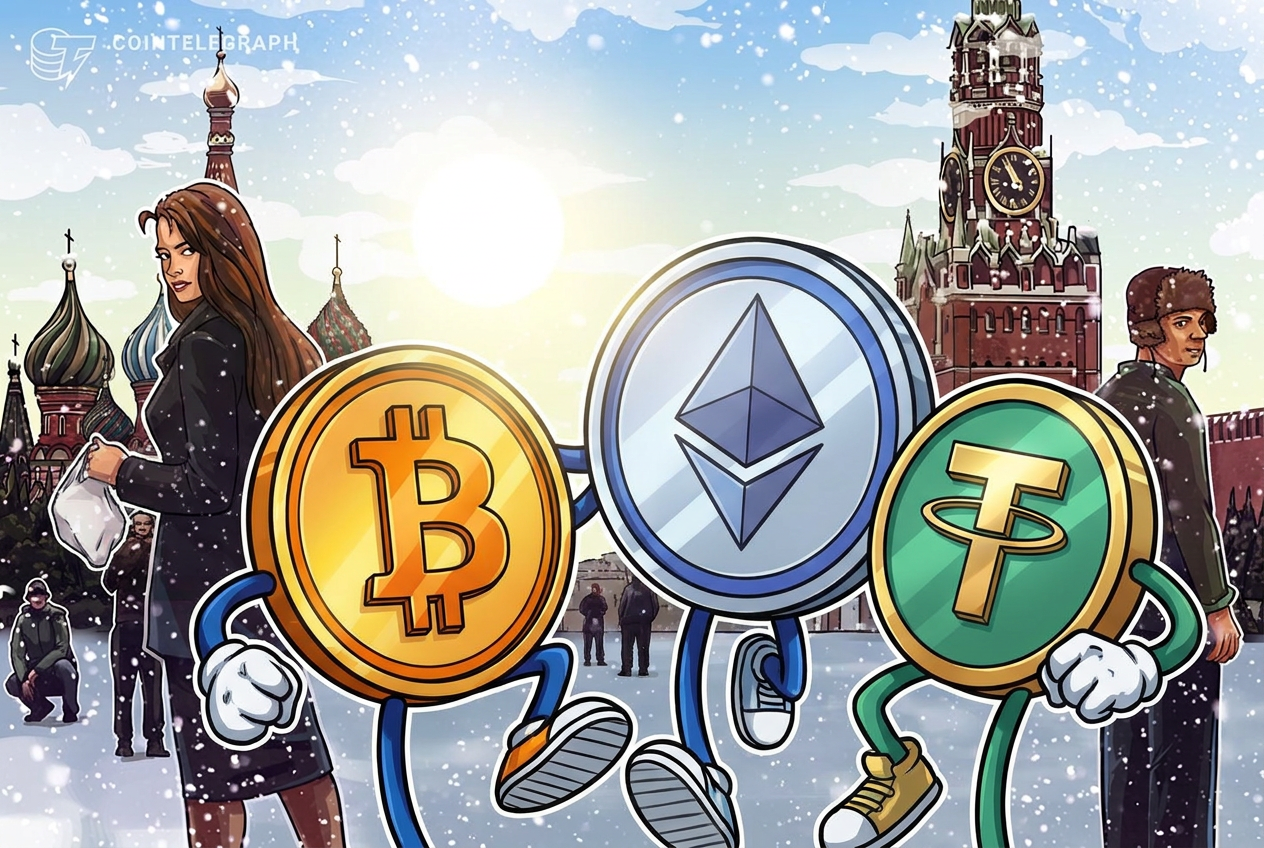
The Moscow Exchange has confirmed plans to open cryptocurrency trading on Dec. 1, offering bitcoin, ether and Tether's USDT through what it calls Russia's first organized digital currency market. The announcement was reported by Cointelegraph and Bitcoin.com News.
According to the exchange, trades will run on its existing stock-market infrastructure and be cleared by the National Clearing Center (NCC). The session is scheduled from 6:50 a.m. to 11:50 p.m. Moscow time, matching the bourse's regular securities schedule.
The venue will initially support same-day and next-day settlement, known as TOD and TOM, along with swap transactions intended to help participants manage liquidity. Bitcoin.com News reported that trading will be offered in both address-based and addressless modes, and that the exchange intends to broaden the list over time to other international cryptocurrencies and Russian digital assets.
The rollout will begin with pilot transactions as financial institutions and other participants finish their preparations. The exchange said it has seen interest from traditional securities traders, their clients, and businesses already using digital assets for investment and payments.
First $85.8KLatest $77.3K-9.8% over the period
Points are daily observations, not closing prices.
Why it matters
The launch is an early test of whether Russia's regulated financial system can draw crypto activity away from offshore platforms and informal channels. Bitcoin.com News noted that Sberbank has estimated crypto trading could reach at least 4 trillion rubles (about $46 billion) in the framework's first year, but expected only around 20% of that volume to pass through regulated exchanges.
Retail access will be narrow. Non-qualified investors must pass a knowledge assessment before buying crypto and are limited to 300,000 rubles (roughly $3,700) in annual purchases through each broker, a restriction both outlets highlighted. The law permits regulated trading but keeps a ban on using cryptocurrency to pay for goods and services in Russia.
Background
The main provisions of Russia's crypto law took effect Sept. 1. Bitcoin.com News reported that the exchange had already begun testing crypto transactions with professional market participants in early October, and that executive Boris Blokhin said the bourse could offer crypto trading under existing licenses without additional regulatory approvals.
The Moscow Exchange and the NCC have been under US sanctions since June 2024, when the UK also sanctioned the exchange, and the European Union added it to its sanctions list in July 2026, according to Cointelegraph.
What is still unclear
Demand is disputed. Sergey Mendeleev, founder of the cross-border payments platform Exved, told Cointelegraph he doubted the market would attract significant interest, saying neither the global nor the local market would notice, and questioning who would trade on a sanctioned venue. He predicted uncompetitive conditions and warned of wide spreads, calling the offering unattractive for ordinary non-qualified investors.
Mendeleev did see potential in cross-border payments, saying a venue where importers and exporters could trade crypto directly would be welcome, while questioning whether another intermediary could compete in a market where traders negotiate over price differences as small as 0.05%.
What to watch
How much volume actually reaches the regulated venue, and how quickly the exchange expands beyond the first three assets, will be the main indicators to follow after Dec. 1. The gap between Sberbank's projected market size and its expectation that most trading stays outside supervised venues is central to that question.
Questions readers ask
Which assets will trade first?
Bitcoin, ether and Tether's USDT, with the exchange saying it plans to add more international cryptocurrencies and Russian digital assets later.
What limits apply to retail investors?
Non-qualified investors must pass a test and can buy no more than 300,000 rubles (about $3,700) of crypto per year through each broker.
Can crypto be used for payments in Russia?
No. The law allows regulated trading but maintains a ban on cryptocurrency payments for goods and services.